Year 7 & 8 Enrichment: Learning from Medicine and Aviation
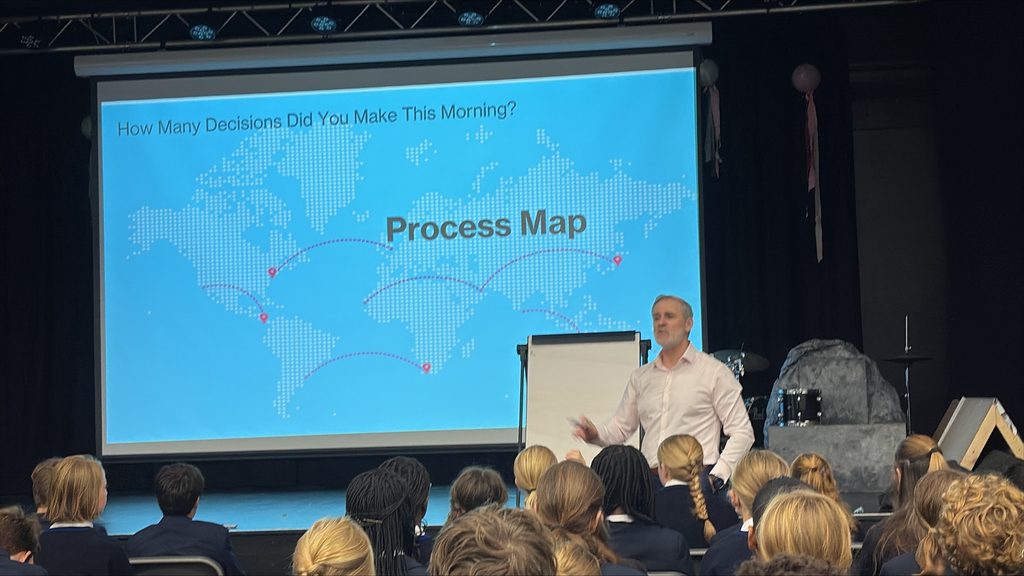
Last week Mike Serbu-Nixon led an engaging enrichment session for our Year 7 and 8 pupils exploring what medicine and aviation can teach us about making good decisions when the stakes are high.
Drawing over 30 years of experience in the NHS including pre-hospital emergency medicine, paramedic practice and major incident management, Mike challenged students to consider the two ways in which our brains think: System 1 and System 2.
Students learned that, when important decisions need to be made, professionals do not rely on their brains alone. Instead, they create systems, procedures, and checklists that help reduce mistakes and improve judgement. A key focus of the session was cognitive bias, particularly:
- Anchoring bias: becoming too attached to our first idea or piece of information.
- Confirmation bias: looking only for evidence that supports what we already believe.
Using the example of The Strict Teacher, pupils considered how quickly assumptions can form and how easily we can overlook evidence that challenges our initial judgement. One of the session’s most important messages was: “Don’t marry your first guess.”
Students were encouraged to adopt a reflective approach to decision-making:
Make a decision
↓
If it doesn’t go as expected, don’t panic
↓
What happened?
↓
What can I learn?
↓
What will I do differently next time?
The session concluded by drawing an important connection between the classroom and the real world. Through a comparison of a typical school day and an emergency response shift pupils saw that many of the same skills are required in both environments. Organisation, communication, teamwork, resilience, critical thinking and reflection are not just qualities needed by pilots and healthcare professionals; they are skills that are developed every day at school and carried forward into adult life and future careers.
The session provided a fascinating insight into how experts in high-pressure fields learn from mistakes, challenge their assumptions and continually improve their decision-making. It also reinforced the value of the skills pupils are already developing through their education, demonstrating how these habits underpin success in a wide range of situations, both now and in the future.
Thank you to Mr Serbu-Nixon for delivering such an inspiring and thought-provoking morning.